I remember sitting there, drenched in sweat, wondering why I had once again volunteered and subjected myself to this grueling condition. As I glanced down at my sweat-soaked shirt, drops of perspiration that had been beading on my forehead now fell to the floor. The chair I occupied seemed to have been designed for a five-year-old; it was diminutive, crafted from wood with simple hand tools, and felt as though it might collapse at any moment. Mosquitoes swarmed, eagerly awaiting the moment my sweat would dilute the repellent, giving them the opportunity to attack and feast on my blood. I found myself reapplying the repellent every few hours to avoid being devoured. This was crucial, especially considering that mosquitoes are responsible for more deaths in the Amazon each year than any other creature. Grasping my canteen for a sip, I realized I had been consuming roughly a gallon of water every hour, yet it never seemed sufficient. With temperatures hovering around 100 degrees and humidity so dense each breath felt like inhaling steam, hydration was a constant battle.
I glanced at the doctor that I was translating for seated beside me, perched on an identical, precarious wooden chair, to gauge if he was keeping hydrated. Drenched in sweat, he was enduring the heat no better than I was. Both of us, along with the entire crew, were eagerly awaiting the end of the day when we could return to the boat, head upriver, and relish the breeze. The doctor, a retiree in his upper 70s, had volunteered last minute to join us after another had canceled. Despite the heat and discomfort, we still had several hours to go before our day concluded.
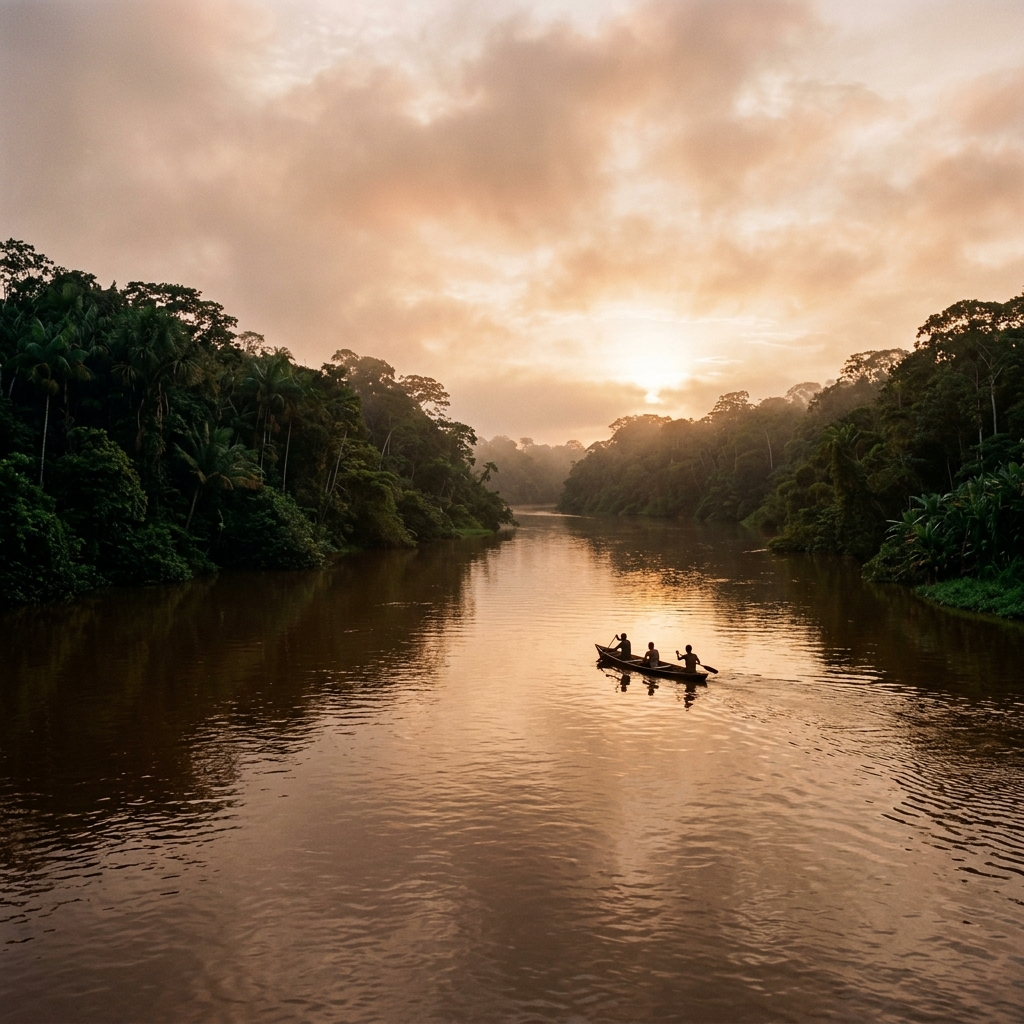
Throughout the day, natives from across this region of the Amazon arrived, standing in line to see the doctor. Many had walked several miles through the sweltering heat and dense jungle, while others arrived in boats. Some vessels were motor-powered, and others rowed, but often, a small wooden canoe, packed to the brim with as many people as it could hold, would appear. They came in search of medical treatment, free supplies, or simply to consult with the doctor.
All day long, we saw a steady flow of patients. Each began with a basic medical checkup, where their blood pressure, heart rate, temperature, and other vital signs were measured. Following this, they were asked about any current illnesses or problems. The examination also included a discussion about their spiritual beliefs, specifically whether they had considered their eternal destiny after death. Once this initial assessment was completed, they moved on to Mark Gerosin and my wife, Yessica, who would open a Bible and share the gospel with them. After hearing the gospel, patients would then come to our station, where I assisted the doctor in translating there needs from Spanish to English and the doctors instructions from English to Spanish.
On this day, we had seen over 100 patients. Almost every individual had some form of parasites and received a deworming pill, but for the most part, their health was generally good. Many hoped to receive free sunglasses by claiming their eyes burned when looking at the sun. Others sought free sunscreen, saying their skin burned if they stayed in the sun too long. I would translate these complaints from Spanish to English, and we often responded humorously, acknowledging the heat and the natural discomfort from looking directly at the sun. Another common tactic for obtaining free medicine was claiming to have had a fever, with some stating their last fever occurred anywhere from a week to two years ago. The doctor, with a touch of humor about wishing for a time machine, would still examine each patient thoroughly, prescribing the best possible treatment for their condition.
However, one aspect that will remain etched in my memory is the doctor's approach to their spiritual health. Before examining any physical ailment, he would assess their spiritual condition, emphasizing its importance over their physical well-being. He believed knowing where they were headed after death was paramount, far more crucial than their current physical health. I had to agree. There is no other reason we would be here in the amazon accept to share the love of Jesus Christ with those who had never felt the loving secure relation with the one who created them.
As we sat there, attending to patient after patient, a woman entered and took a seat in front of the rickety old desk. At first glance, she seemed indistinguishable from the hundred or so individuals we had seen that day. Her deep-set brown eyes and sun-weathered skin spoke volumes of years spent under the relentless Amazon sun. The harsh living conditions had aged her prematurely. Cradling a sleeping baby in one arm and leading another young child by the hand, she didn't appear much different from the many mothers we'd encountered.
I immediately started with the preliminary questions, anticipating the doctor's needs as he perused the report she brought from the initial screening. “Are you pregnant, breastfeeding, when was your last fever?” I inquired. Midway through, the doctor urgently interjected, a tone of alarm in his voice that was new to me. “We need to take this baby's temperature again,” he insisted, his concern palpable. To my untrained eye, everything seemed normal, but the doctor sensed there was something desperately wrong with the child.
We walked with them back to the first station where they had the thermometers and checked the baby's temperature, it was 105 degrees. I then used three other instruments to double check, and they all read 105. The doctor quickly outlined two possible illnesses threatening the baby's life. He instructed me to convey to the woman the critical need for immediate hospitalization and told me to translate to the lady that her baby was in grave danger of dying if not treated immediately. I explained to the lady the situation and then told here the baby needed a hospital. Immediately she said she wouldn't go to the hospital. I wondered why thinking that maybe it was because she did not have a boat as the hospital was close to five hours away by boat.
I approached our boat driver, explaining the situation and inquiring if he could transport the woman and her baby to the hospital. Aware it would entail a grueling ten-hour journey on the river, significantly delaying our return and that our entire crew would get home super late as it was 3 hours back to the village where we were staying. Also meaning we would have all been riding on the river at night which can be extremely dangerous, I also assured him I would cover the fuel costs. After securing his agreement, I confidently informed the woman that transportation was arranged, believing this would alleviate her initial reluctance and that this was the reason she rejected taking her baby to the hospital in the first place.
As I introduced her to the boat driver and told her he would take her to the hospital she looked at me and continued shaking her head no saying she was not going to take her baby to the hospital. With much confusion I could not figure out why she kept refusing to take her baby who was surely going to die if he did not get help. Finally in desperation I went and grabbed my wife Yessica to talk to her. I thought for sure she would listen to her as she is a lady, and her native tongue is Spanish. Maybe she would have more influence and the lady would have more confidence in her.
Yessica spoke to her for quite some time explaining once again the grave danger her son was in and his need for immediate medical attention. She explained to her how we would take care of the boat ride and then she even offered to pay for the hospital bill which here in Colombia would not have been more than $100 dollars. Everyone thought for sure there is no way she would refuse the offer to save her sons life. All she had to do was accept and get on the boat but even after Yessica pleading with her she refused saying she would not take her son to the hospital knowing that her son probably would not make it through the night.
We all stood there, completely perplexed, and frustrated, trying to make sense of the situation that had just unfolded, wondering why it would not have been simpler to just get on the boat and head to the hospital. Finally, Yessica asked her why. Why would she not accept the help when everything was paid for, and her son's life could potentially be saved? Why was she so adamant about not going to the hospital? What was stopping her from accepting the help and the salvation her son needed to live?
What was stopping her from accepting the help and the salvation her son needed to live?
I watched as she explained to Yessica that several months ago, another child in this same village had faced a similar problem. A young boy, no more than a year old, had an extremely high fever for several days. They had given him medicine and local remedies. The local witch doctor had prayed for him. They had tried everything until, finally, out of desperation, the villagers had come up with the money to take the baby to the hospital. They loaded the boat with the mother and the baby and took the long trip up the river, but it was too late. Within an hour of entering the hospital, the baby lost his life and passed into eternity.
When the mother returned to the village with a very sad and broken heart and the lifeless body of her young boy in her arms, the villagers, anticipating news of the hospital's power to save the baby, crowded around the mother, only for her to tell them the baby was dead. She told them the hospital had killed her baby. In the village, the baby was sick but alive. On the boat ride, the baby was sick but alive, but when they entered the hospital, her baby died. The conclusion the villagers had come to was not that the baby had been taken too late to the hospital, but that the baby had been killed by the hospital.
While we were all very surprised by the belief that the hospital kills babies, it was not uncommon for many in the Amazon to create similar beliefs based on circumstances that had occurred at one time or another, without evidence of their truth. Many stories were concocted involving medicine, ghosts, and even religion. One such story shared by a young girl, eight years old, with my wife, involved a snake. She told my wife that her grandfather prayed to a snake god, who brought prosperity and wealth to the family. The grandfather had cut off the head of a snake and buried it. Once, when he prayed to the snake at the place where he had buried its head, someone gave him money that day. For this reason, he continued to pray to the snake head in the ground for money and prosperity.
At this point, I watched as the doctor walked off into the jungle, overwhelmed by frustration and sadness. I stood there, almost unable to believe my ears, struggling to understand why anyone would believe this. Yessica continued talking to the mother, offering some advice to relieve the baby's pain and fever. I looked at the mother and felt deeply sad for what I had just witnessed. Here, a baby was surely going to die because of a misunderstanding about how sickness works and how hospitals operate, yet there was nothing any of us could do except pray.
While this situation was devastating and sad to witness, knowing that this baby was going to lose his life, what was even more saddening is the realization that this is how many people in the Amazon and the Andes mountains of Colombia live their lives. They have a free ride to eternal life and a relationship with the one who loves them. The price has been paid by the blood of Jesus Christ on the cross. All that is necessary is to accept and put your faith in Him, and they will have eternal life, free from sickness and pain. Yet, many, when presented with the opportunity, refuse it due to long-standing traditions and beliefs passed down by religion and families that we need to work for salvation, or that we need to pay for salvation, or enter some sort of god state to be able to spend eternity and have a relationship with God.
Many have never been told of the gift of God, the gift of eternal life, the gift of a relationship with Him. Many will have stories that are far more tragic than the passing of this young boy and the negligence of a mother believing in a superstition that killed him. Many will die believing in a superstition because they have not been told of the wonderful gift of salvation; they will spend an eternity in hell for their beliefs. While the death of a young boy due to superstitious beliefs is very tragic and sad, much more tragic is the death of people who do not accept Christ.
Sharing the gospel with others is our one great commission in this world. Only what we do for Christ really matters. While we may get upset at a mother who had the chance to save her son and did not, are we not more guilty for having the truth, having the information of how we can have all our sins, all our illnesses, wiped away, the information of the salvation of Jesus Christ, yet not share it? It is our duty, our command, our responsibility to share.
Millions of people all over the world have an offer of their sins being paid for and washed away by the blood of Jesus Christ. Many will refuse, believing in superstitious beliefs, just like this lady refused the hospital for her son, but many will receive. Whether they receive or not is not up to us. It is up to us to go into all the world and preach. The stories contained in this book are those of people here in Colombia, in the Amazon jungle, the plains, and the Andes mountains who accepted Christ and how their lives were transformed for all eternity.